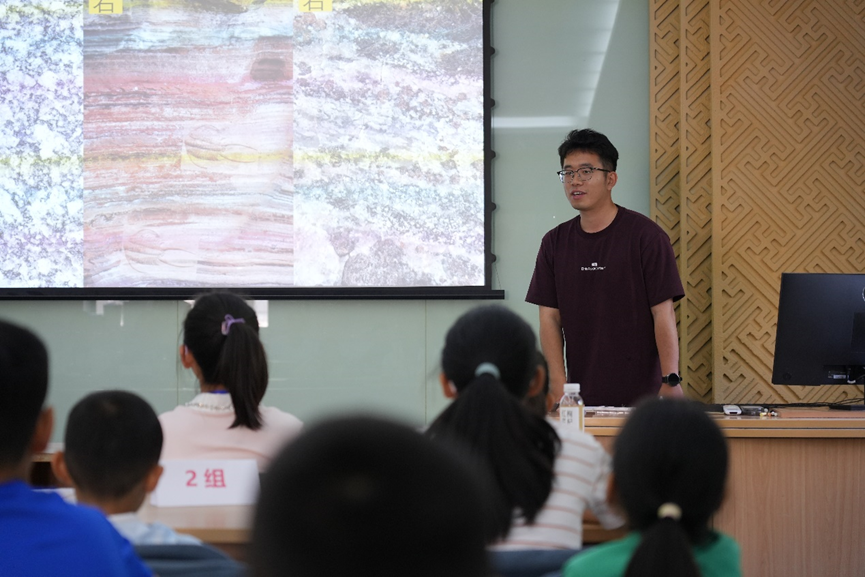
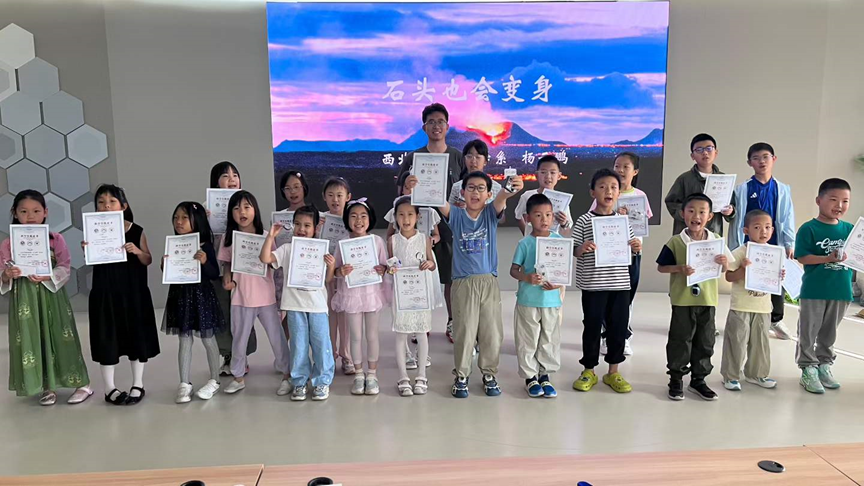
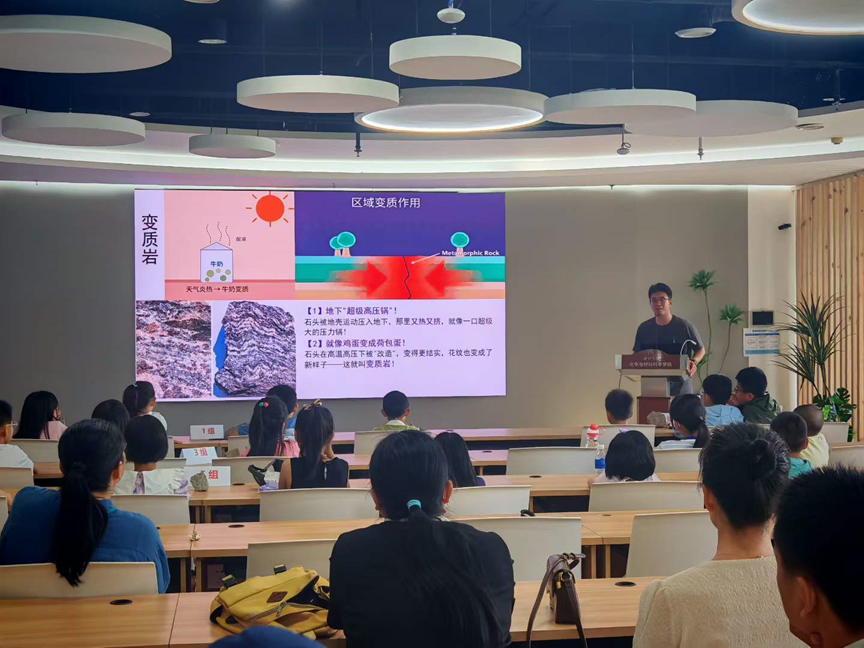
The event site is full of practical knowledge and has a strong atmosphere. Science popularization volunteer Yang Yunpeng (a master's student in the Department of Geology at Northwest University) led children to approach the "hard core code" of the Earth - rocks - in vivid and popular language. Based on rock science knowledge, systematically explain the core characteristics, formation principles, and unique features of three major types of rocks: magmatic rocks, sedimentary rocks, and metamorphic rocks, and meticulously dissect the identification techniques for different rocks. At the same time, through dynamic and easy to understand knowledge explanations, the geological processes of the transformation of the three major rock types are popularized, transforming abstract earth science knowledge into intuitive and interesting content. In class, children listen attentively, think seriously, and immerse themselves in the unique charm of geological science.
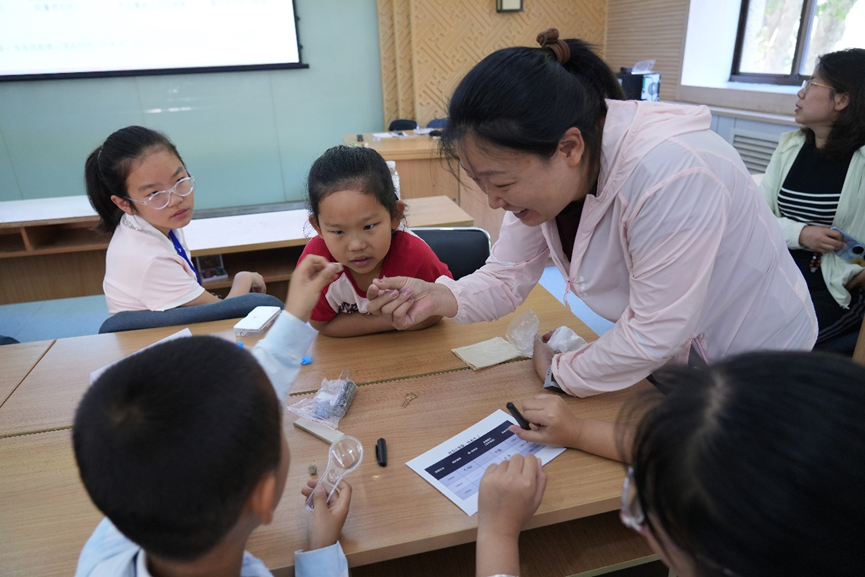
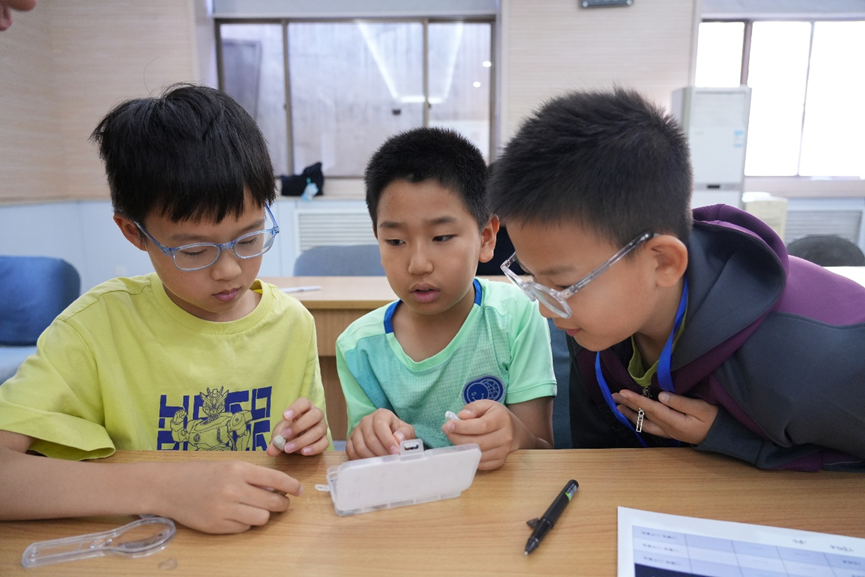
Activity setting: rock practical identification section. Children apply what they learn, relying on the identification methods learned in lectures, carefully observe the texture, texture, color and other characteristics of rocks, and independently complete rock recognition and classification tasks. The on-site participation atmosphere was enthusiastic, and the children actively engaged in hands-on activities and boldly explored, successfully completing practical challenges with excellent observation and learning abilities.
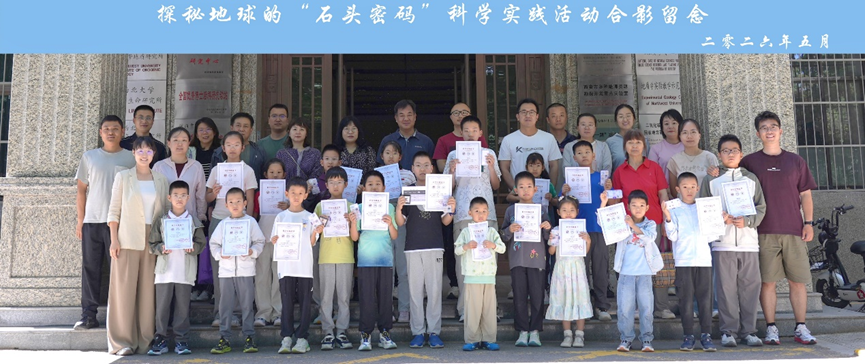
This science popularization practice activity, in the form of fun science popularization and practical experience, not only allows children to explore the mysteries of Earth's rocks up close and gain professional geological knowledge, but also plants the seeds of love for science and courage to explore in their hearts.

 No. 229, Taibai North Road, Xi'an, Shaanxi Province
 710069
 029-88302202
 029-88302202
 geo_office@nwu.edu.cn
 English


 登录
登录


 Home
Home