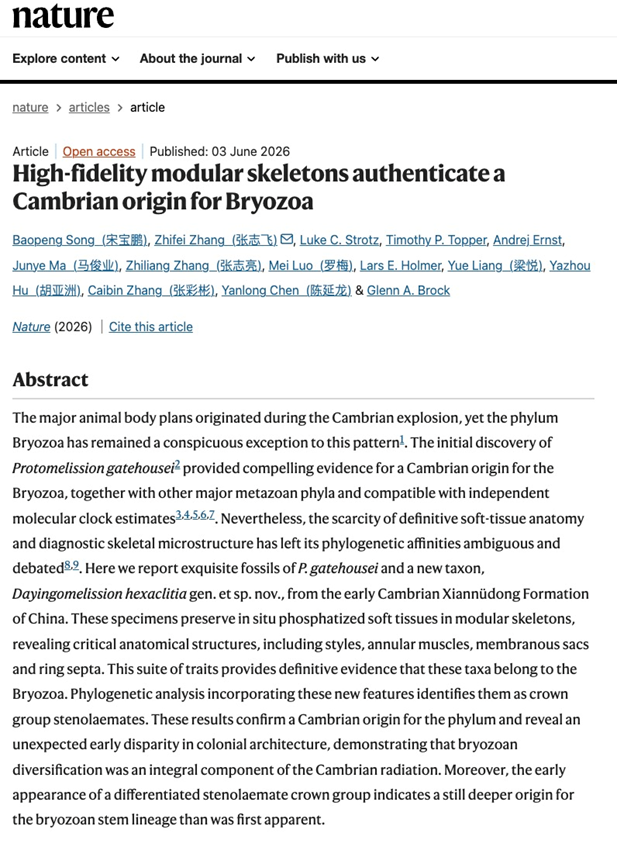
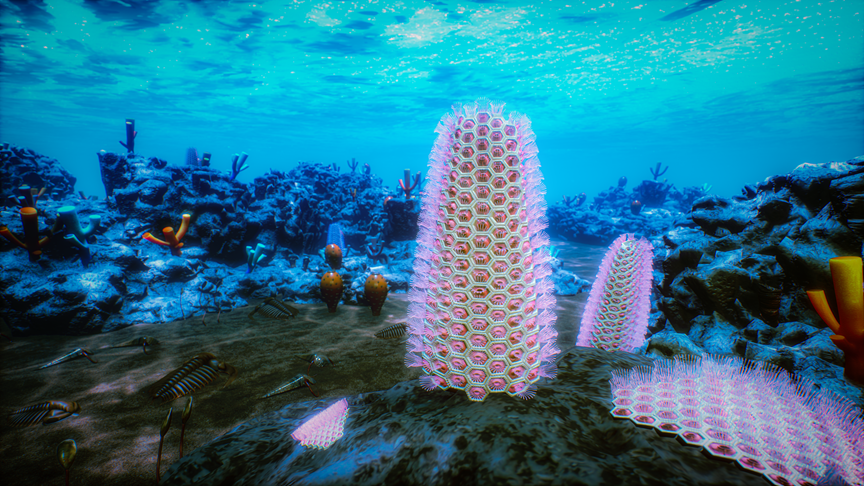
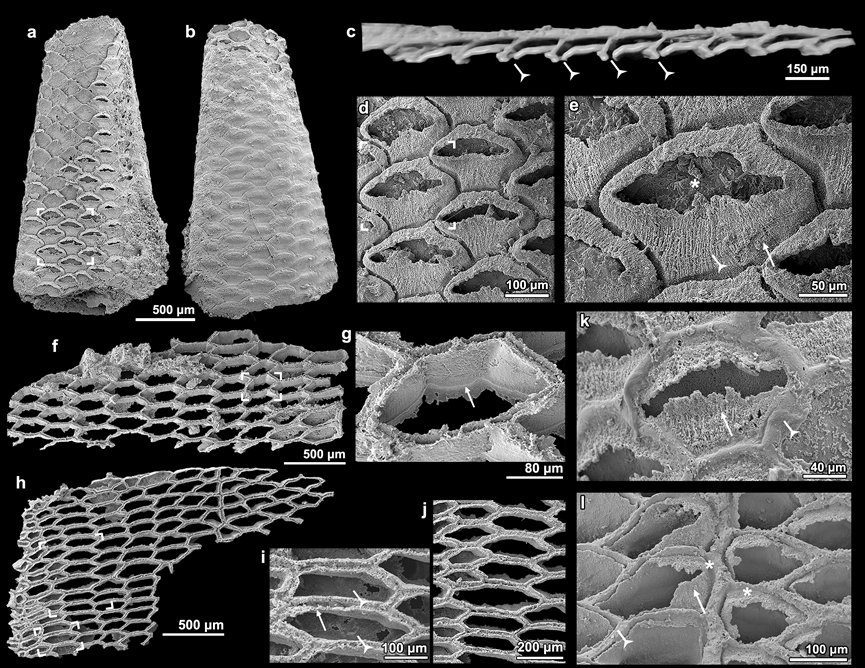
This study once again proves the suddenness and transience of the Cambrian Explosion, officially locking the origin of mosses with mineralized bones in the early Cambrian period, further supporting the "three act Cambrian Explosion" hypothesis proposed by Academician Shu Degan's team, and once again perfecting the construction process of the Cambrian animal tree that lasted about 40 million years, connecting the fossil evidence chain of the three major stages of the appearance of basal animals, protostomes, and retrostomes in the Precambrian.
.
With the discovery and confirmation of the bryozoan fossils, issues such as tracing the source of their stem fossils, skeletal evolution mechanisms, and community iteration patterns still need to be resolved. The team has conducted continuous sampling in multiple early to late Paleozoic profiles in South and North China, and plans to combine traditional fossil processing, high-precision CT, paleoecology and morphological analysis, and geochemical indicators to further reveal the environmental driving forces and developmental constraints of early radiation in bryophytes. ”Zhang Zhifei said. The first author of the paper is Song Baopeng, a doctoral student in the Department of Geology at Northwest University, and the corresponding author is Professor Zhang Zhifei. Northwestern University is the first completion unit and communication unit. The Chinese and foreign partners in this paper include the Nanjing Institute of Geology and Paleontology, Chinese Academy of Sciences, the Swedish Museum of Natural History, Uppsala University, Hamburg University, Germany, Macquarie University, Australia, and Utrecht University, the Netherlands.
Article link: https://www.nature.com/articles/s41586-026-10590-9

 No. 229, Taibai North Road, Xi'an, Shaanxi Province
 710069
 029-88302202
 029-88302202
 geo_office@nwu.edu.cn
 English


 登录
登录


 Home
Home