Chang'e-5 Basalt: The "Titanium Ore Code" Hidden Deep in the Moon. Basalt is a rock formed by volcanic eruptions and a "window" for studying the internal structure and activity of planets. Compared with Earth basalt, lunar basalt has a significant characteristic - the titanium content varies greatly, from less than 1% wt.% to over 15% wt.%, reflecting significant chemical heterogeneity in the lunar mantle. It is usually divided into two categories based on this: "low titanium type" and "high titanium type". It is noteworthy that the Ti content of the basalt returned by Chang'e-5 (CE-5) is between the two, located in the transition zone between high titanium and low titanium basalt, and is considered a key sample for understanding the evolution process of the lunar mantle (Figure 1).
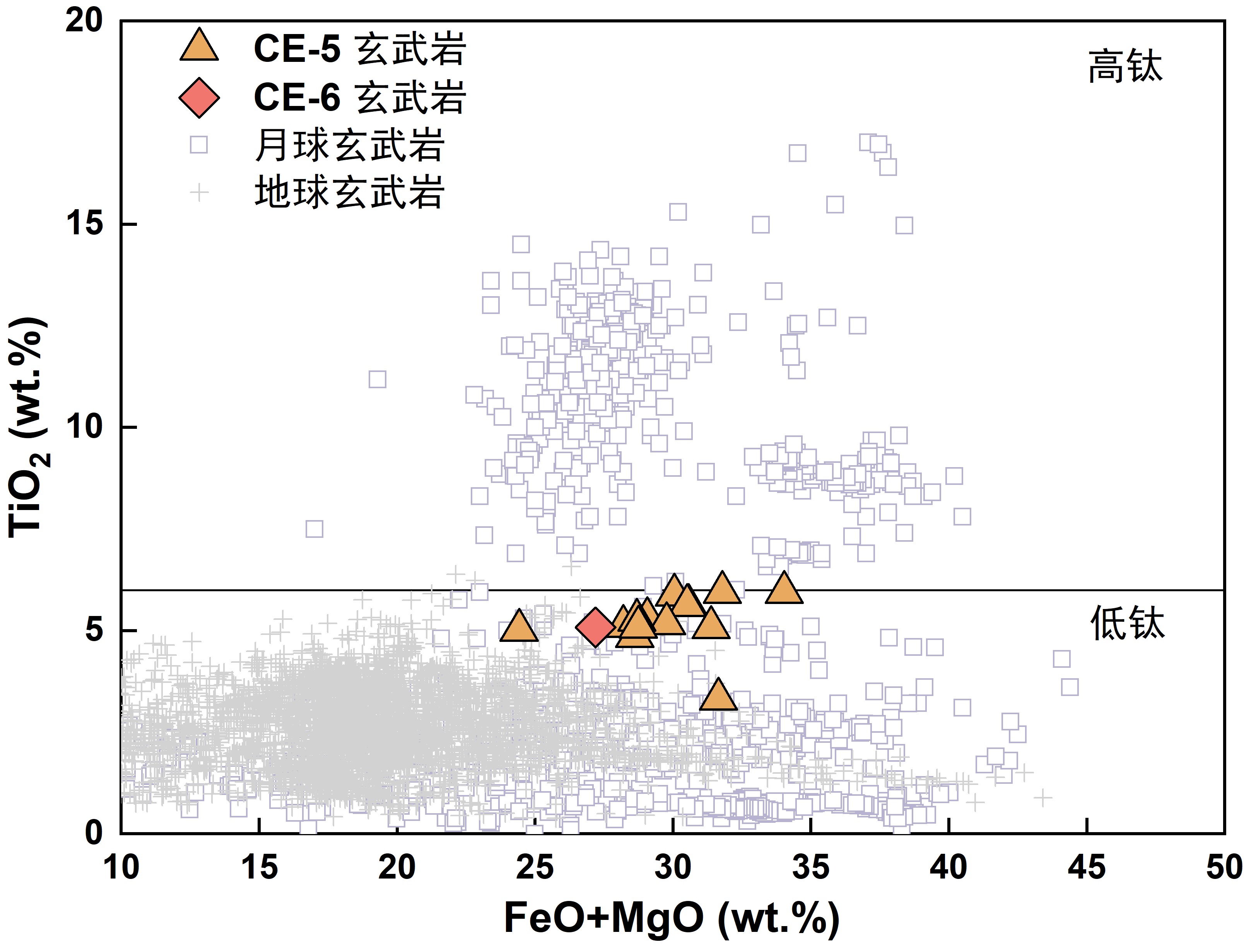
It is widely believed in the scientific community that in the early stages of lunar formation, there was a huge ocean of molten magma, known as the "Lunar Magma Ocean" (LMO). As the magma gradually cools and crystallizes, the titanium rich mineral - ilmenite - may accumulate in large quantities, forming a layer of ilmenite core (IBC), and due to its high density, it undergoes gravity subsidence and enters the deep part of the lunar mantle. A key scientific question about the Chang'e-5 basalt formed 2 billion years ago is still unclear: whether IBC participated in magma evolution during the evolution of Chang'e-5 basalt. To answer this question, the research team turned their attention to the highly sensitive "tracer" of magma evolution - titanium isotopes. Due to the tendency of ilmenite to enrich light titanium isotopes, its separated crystallization is expected to leave identifiable isotope signals in lunar basalt. With the development of high-precision in-situ laser ablation Ti isotope analysis technology, it has become possible to analyze isotope changes at the mineral scale.
First clue: Abnormal increase in titanium content of pyroxene
The research team used techniques such as Mineral Automatic Quantitative Analysis System (TIMA), Electron Probe Microscopy (EPMA), Laser Erosion Quadrupole Inductively Coupled Plasma Mass Spectrometry (LA-Q-ICP-MS), and Laser Erosion Multi Acceptance Inductively Coupled Plasma Mass Spectrometry (LA-MC-ICP-MS) to conduct in-situ Ti isotope and geochemical analysis on six CE-5 basalt debris.
. The results showed that CE-5 pyroxene exhibited higher Ti content than low titanium basalt in the early stages of magma evolution, and increased sharply with the crystallization differentiation process (Figure 2A). This trend cannot be explained solely by the separation crystallization of iron magnesium minerals, indicating the possible introduction of additional titanium rich substances - IBC - into the source region or evolutionary process.Second clue: The mother magma of Chang'e-5 is rich in ilmenite
According to the lunar magma ocean hypothesis, minerals crystallized at different stages of the magma ocean will form different basalt source regions.
. Usually, 86 PCS (percentage crystallized solid: solidification ratio) represents the composition of clinopyroxene, and 95 PCS represents the composition of ilmenite. Further simulation of the rare earth element characteristics of magnesium rich pyroxene (Mg #>60) shows that the CE-5 parent magma can be generated from a mixed source area of clinopyroxene and ilmenite (86 PCS+95 PCS), and undergoes 2-3% partial melting and about 70% fractional crystallization formation (Figure 2B), providing independent evidence for IBC involvement.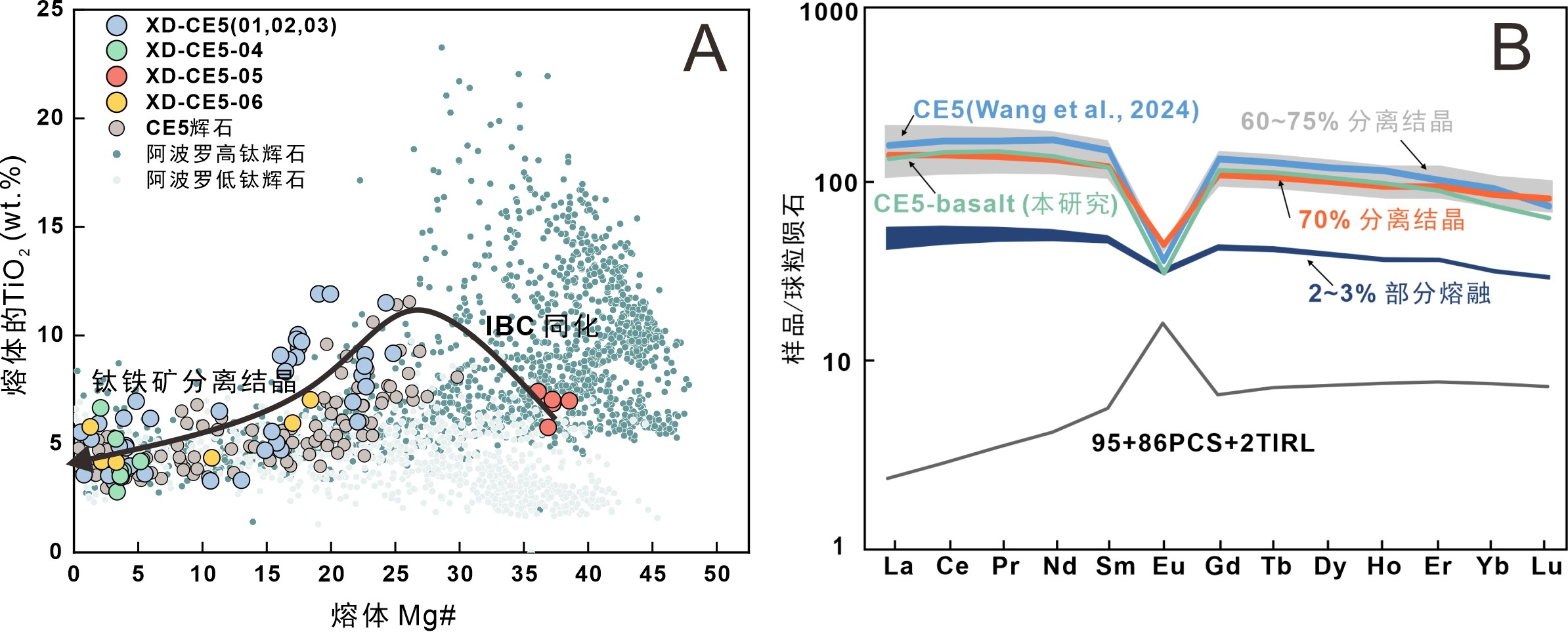
Third clue: Isotope differences in ilmenite
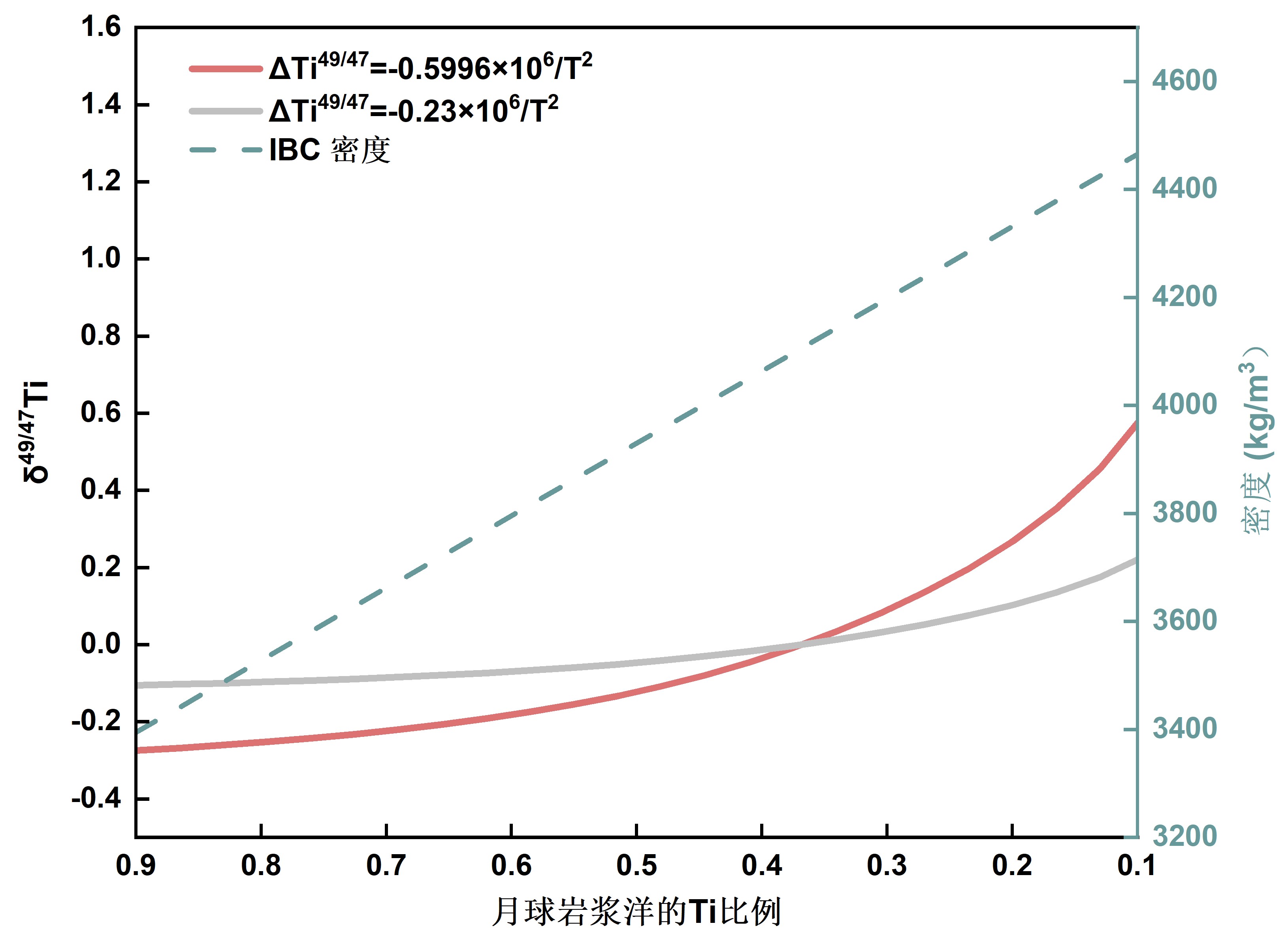
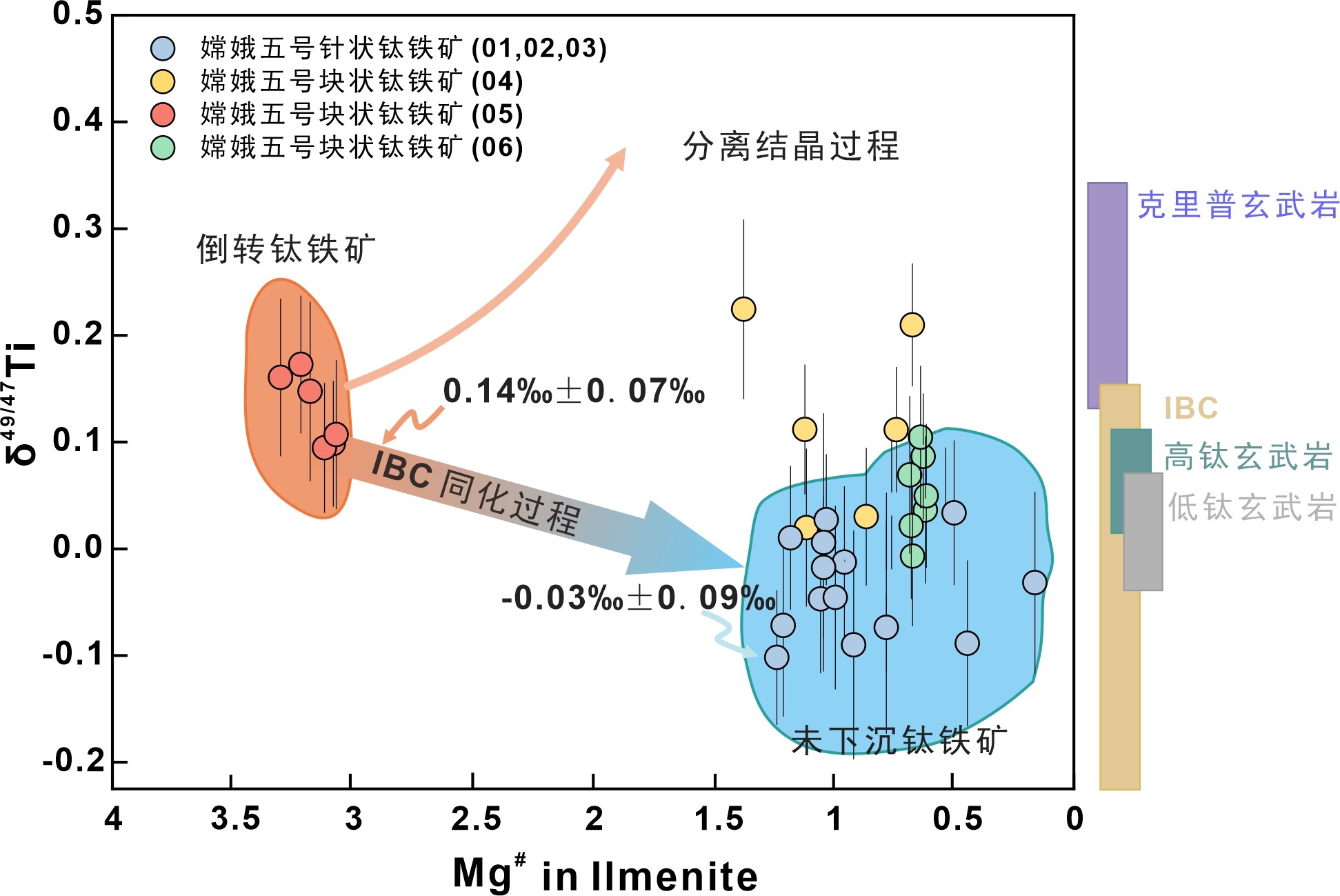
The research team further analyzed the titanium isotope composition of ilmenite and discovered intriguing phenomena. The ilmenite in the CE-5 sample mainly presents two forms: block shaped and needle shaped. The δ 49Ti values of the two are significantly different - block shaped ilmenite (0.01 ‰ -0.18 ‰) is significantly heavier, while needle shaped ilmenite (-0.09 ‰ -0.04 ‰) is relatively lighter (Figure 3). The model shows that in the late stage of lunar magma sea, as ilmenite continues to accumulate, the overall density and δ 49Ti of the crystal layer will gradually increase (Figure 4). These 'heavier and denser' late IBCs are more prone to gravity overturning and sinking into the lunar mantle. Therefore, the heavy isotope signals in the blocky ilmenite are likely to record the process of these late stage sinking IBCs re participating in melting and mixing into the source area.
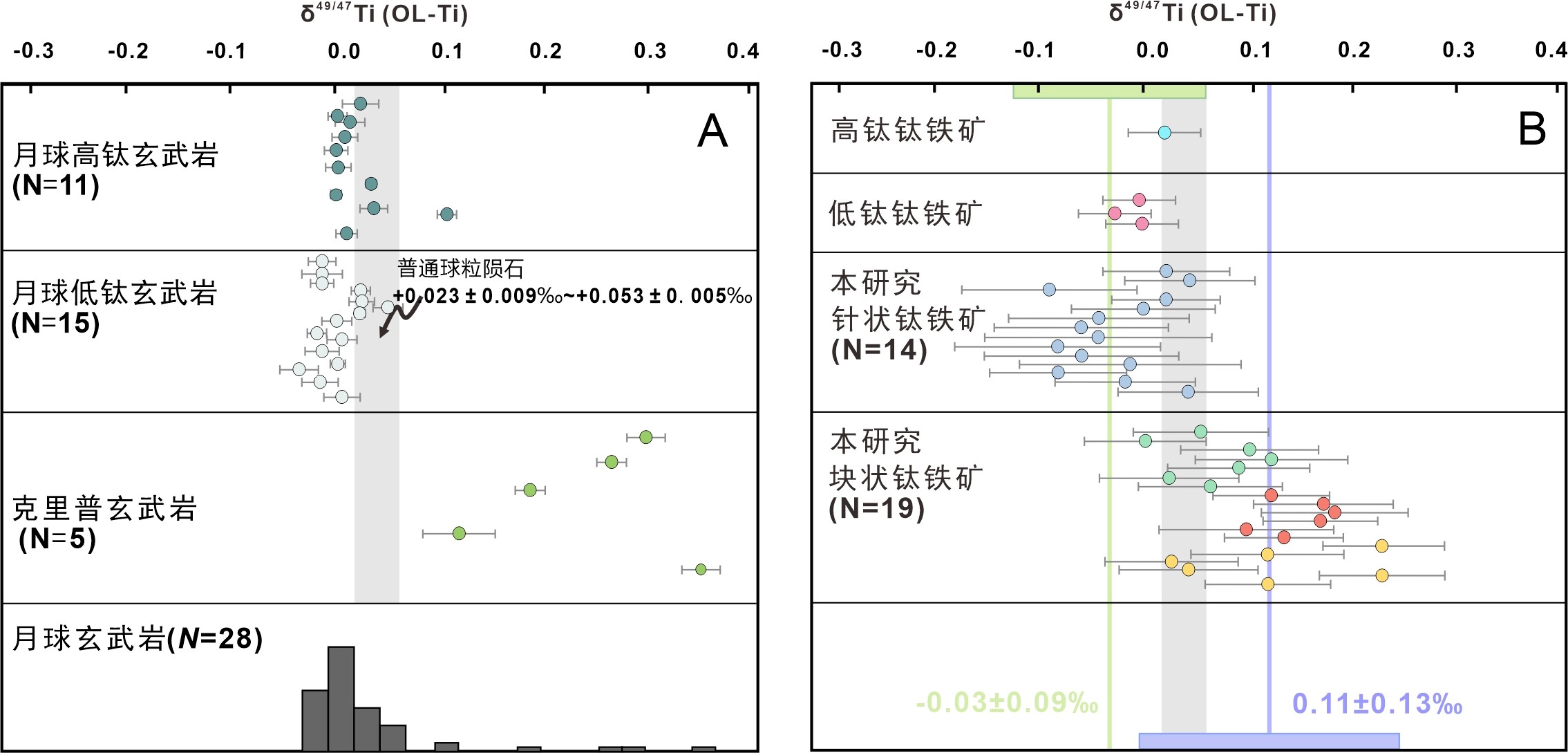
What does the lighter δ 49Ti in needle shaped ilmenite indicate? The study excluded isotope fractionation caused by element diffusion during magma ascent: even in extreme cases, the δ 49Ti shift caused by this effect is less than 0.02 ‰, far smaller than the actual observed change amplitude. At the same time, the variation of major elements inside ilmenite is limited, and the diffusion rate of Ti is extremely low. On the contrary, early formed IBCs themselves have a lighter Ti isotope composition and a lower density than late formed IBCs, making them more likely to remain in their original positions and be carried into the melt during later magmatic activity. Therefore, the addition of light isotope IBC during magma evolution is a reasonable solution to explain the characteristics of needle shaped ilmenite (Figure 5).
Inference: There is a ilmenite crystal layer in the source area of the lunar storm ocean Kripp terrane
The landing area of Chang'e-5 is located in the Kripp terrane (PKT) of the storm ocean, where basalts are generally rich in titanium. Research suggests that a large-scale impact event in the South Pole Aitken Basin may have redistributed the titanium rich IBC to the near side of the moon, making its interior more prone to melting. The residual ilmenite in the mantle last month can lower the melting point of the source region, thereby promoting magma production, which also provides a new explanation for the continued volcanic activity on the near side of the moon until about 2 billion years ago.
Based on comprehensive mineralogy, geochemistry, and in-situ Ti isotope evidence, the study shows that the source area of the Chang'e-5 basalt is not uniform, but composed of clinopyroxene (86 PCS) and ilmenite (95 PCS).
. Further research suggests that IBC may have isotopic stratification: late stage sinking pile crystals are enriched with heavy Ti isotopes, while light Ti isotope components are mixed into the source area during the later magma evolution process. The upper mantle of the PKT region near the moon may still retain some unsinkable IBCs, providing an important material basis for maintaining long-term volcanic activity.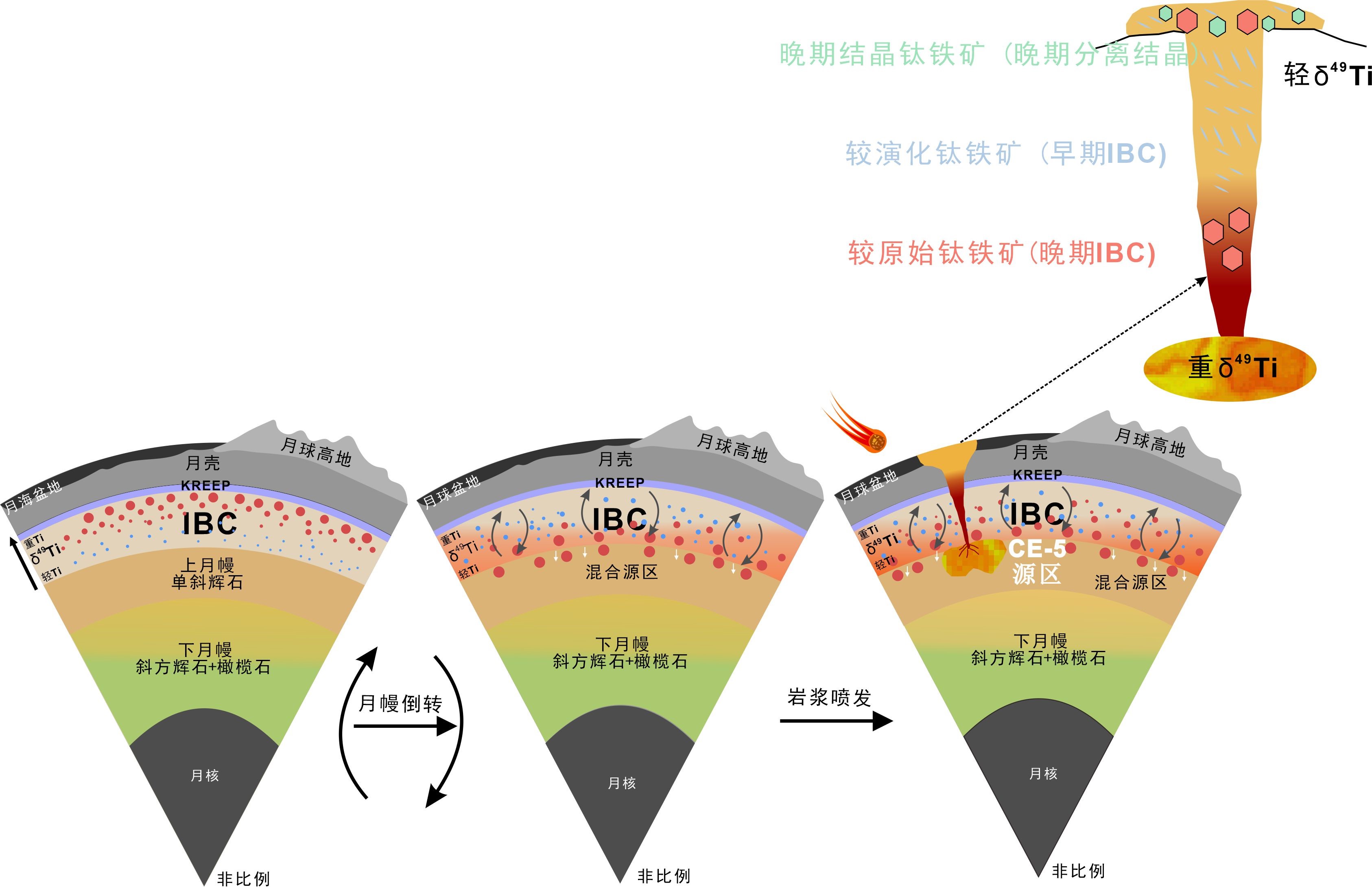
Cheng Yudong, a master's student in the Department of Geology at Northwestern University, is the first author of this paper. Professor Huang Kangjun from the Department of Geology at Northwestern University and Professor Deng Zhengbin from the University of Science and Technology of China are co corresponding authors. The main collaborators include Academician Zhao Guochun from Northwestern University/University of Hong Kong, Professor Chen Lihui, Professor Zhang Chao, Professor Song Wenlei, Senior Engineer Chen Kaiyun, Associate Professor Guo Zhuang, Associate Professor Wang Xiaojun, as well as Dr. Wang Xing and Master's degree candidate Ma Jingru from the Department of Geology at Northwestern University, and Professor Wang Xiangsong from the University of Hong Kong. The research assistant professor also participated in this work. The sample was supported by the Chang'e-5 lunar sample returned by the National Space Administration (CE5C0200). This study was jointly funded by the National Natural Science Foundation of China (42373061, 42373040).
Paper link: https://academic.oup.com/petrology/advance-article-abstract/doi/10.1093/petrology/egag017/8471756?redirectedFrom=fulltext& ;login=true
Related references:
Millet, M.-A., Dauphas, N., Greber, N.D., Burton, K.W., Dale, C.W., Debret, B., Macpherson, C.G., Nowell, G.M., Williams, H.M. (2016). Titanium stable isotope investigation of mag-matic processes on the Earth and Moon. Earth Planetary Science Letters 449, 197-205. http://doi.org/10.1016/j.epsl.2016.05.039.
Kommescher, S., Fonseca, R.O., Kurzweil, F., Thiemens, M., M ü nker, C., Sprung, P. (2020). Unravelling lunar mantle source processes via the Ti isotope composition of lunar basalts. Geochemical Perspectives Letters 13, 13-18. http://doi.org/10.7185/geochemlet.2007.
Deng, Z., Schiller, M., Jackson, M.G., Millet, M.-A., Pan, L., Nikolajsen, K., Saji, N.S., Huang, D., Bizzarro, M. (2023). Earth’s evolving geodynamic regime recorded by titanium isotopes. Nature 621, 100-104. http://doi.org/10.1038/s41586-023-06304-0.
Anguelova, M., Vilela, N., Kommescher, S., Greber, N.D., Fehr, M.A., Sch önbä chler, M., 2024. Constraining the mass-dependent Ti isotope composition of the chondritic reservoir–An inter-laboratory comparison study. Geochimica et Cosmochimica Acta 372, 171-180. https://doi.org/10.1016/j.gca.2024.01.026.

 1 Xuefu Avenue, Guodu Education Industrial Park, Chang'an District, Xi'an, Shaanxi Province
 710127
 029-88302202
 029-88302202
 geo_office@nwu.edu.cn
 English


 登录
登录


 Home
Home