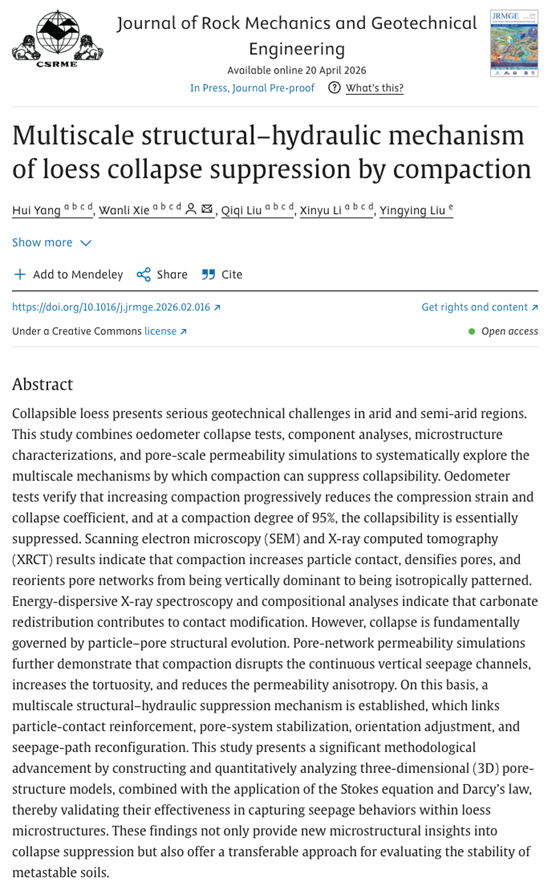
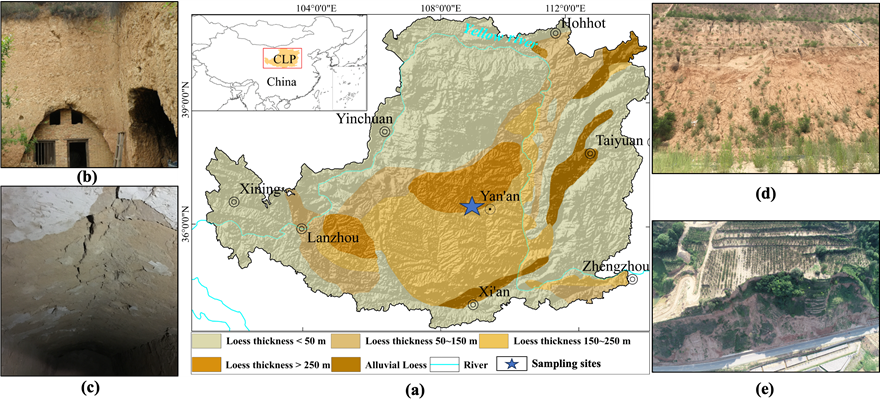
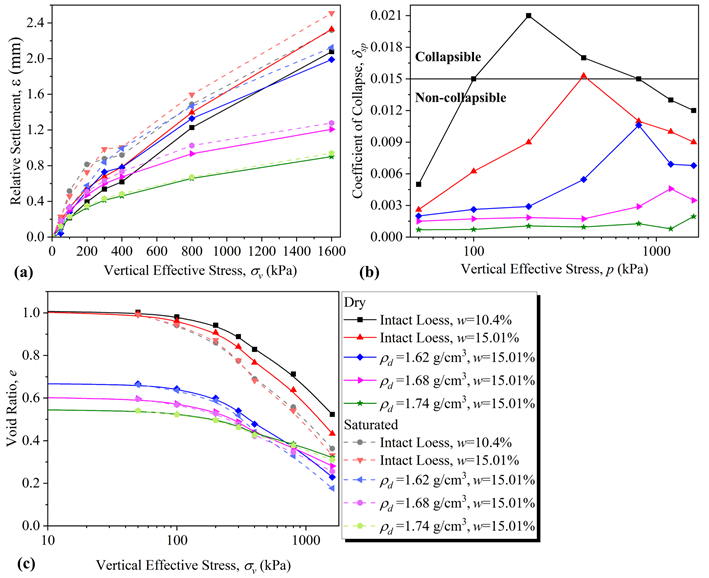
The study found that as the compaction degree increases, the loess collapsibility coefficient significantly decreases. When the compaction degree reaches 95%, the collapsibility is basically suppressed (Figure 2). The compaction effect promotes the contact and bonding between particles, significantly reduces the number of large pores, and gradually transforms the pore structure from vertically dominant channels to a uniform and dense structure.
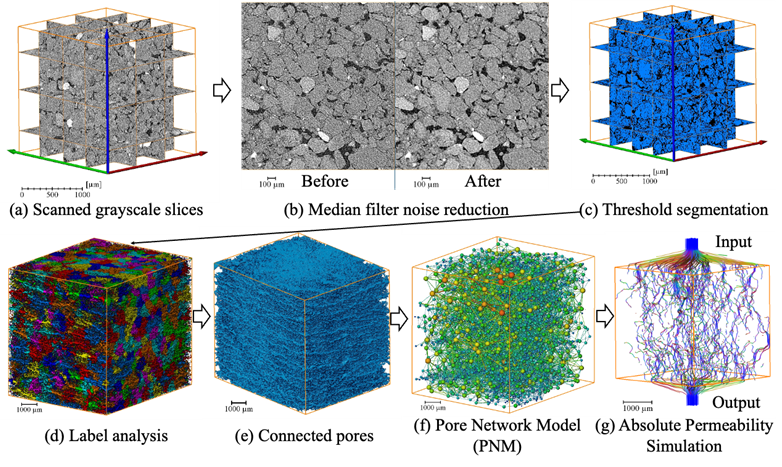
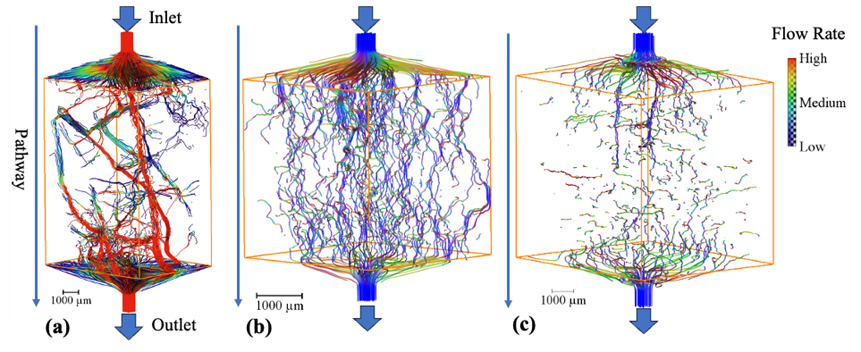
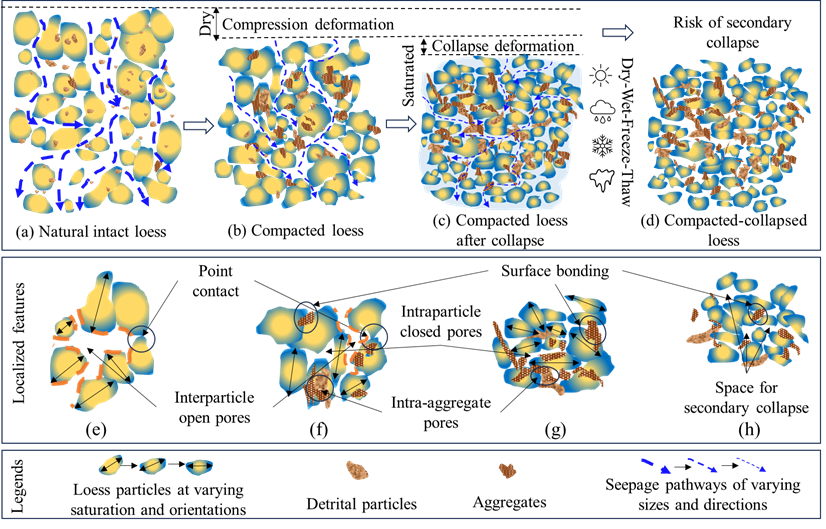
Further research has shown that compaction effectively suppresses the collapsibility of loess by promoting multi-scale structural hydraulic reorganization processes such as particle contact strengthening, pore network densification, tortuous seepage paths, and reduced permeability, achieving the transition of loess from a metastable structure to a stable engineering medium (Figure 5). At the same time, studies have pointed out that under long-term immersion, groundwater level fluctuations, and long-term engineering service conditions, compacted loess may still pose potential risks of secondary collapsibility, which need to be continuously monitored in engineering practice.
Paper information and link: Hui Yang, Wanli Xie, Qiqi Liu, Xinyu Li, Yingying Liu, Multiscale structural–hydraulic mechanism of loess collapse suppression by compaction, Journal of Rock Mechanics and Geotechnical Engineering, 2026, ISSN 1674-7755, https://doi.org/10.1016/j.jrmge.2026.02.016.

 1 Xuefu Avenue, Guodu Education Industrial Park, Chang'an District, Xi'an, Shaanxi Province
 710127
 029-88302202
 029-88302202
 geo_office@nwu.edu.cn
 English


 登录
登录


 Home
Home