The oxygen content in the ocean is a key factor affecting the radiation and evolution of early life. The area of the ocean is extremely vast, and the spatial variability of oxygen content is strong. For example, the oxygen distribution in the early Earth's oceans may have been dominated by the "oxygen oasis" model of productivity, while the water bodies where modern ocean productivity is flourishing are more prone to hypoxia, resulting in a completely different spatial distribution of oxygen.
On December 17, 2025, Northwestern University, in cooperation with the University of Granada in Spain, the University of Tennessee in the United States, and the Institute of Geology and Geophysics of the Chinese Academy of Sciences, published the research results entitled "Late Orovician calibrated physisonealean red algae: systematics and evolutionary significance" in the NI (Nature Index) journal in the biological field. Zhuang Weiling, a doctoral student in the Department of Geology at Northwest University, is the first author of the paper, and Associate Professor Liu Lijing is the corresponding author. This achievement shows that Chinese researchers found the earliest known Peyssoneliales red algae fossils in the Upper Ordovician of the Tarim Basin for the first time, which is also the earliest accurate fossil record of Rhodymeniphytae at present. About 450 million years ago, the fossil record of Peyssoneliales was advanced from the Late Cretaceous (Aptian, 121.4-117 Ma) to the Late Ordovician (Katian,~453 Ma). This study provides important fossil evidence for the early differentiation of the red algae subclass, and is of great significance for revealing the origin of calcareous red algae in the Early Paleozoic, the radiation evolution scale of calcareous red algae in the Ordovician, and the transformation of tropical marine reef communities in the Ordovician.
The Ordos Basin is located in the western part of the North China Craton and preserves sedimentary strata from the Archean to the Cenozoic era. It is an important area for studying the tectonic evolution of inland China. The western edge of the basin is located at the intersection of the Alxa Block, the Central Asian Orogenic Belt, the Qinling Orogenic Belt, and the northeastern edge of the Qinghai Tibet Plateau, with strong tectonic activity, especially the tectonic deformation and multi-stage orogeny since the Mesozoic era, making it an ideal place for studying the process of tectonic evolution.
An important breakthrough in plate tectonics theory in recent decades is the recognition that the continental crust can undergo deep subduction to mantle depths greater than 80-120 kilometers or even ultra deep subduction to mantle depths greater than 250-300 kilometers and fold back to the surface. Determining the maximum subduction reentry depth of the continental crust is of great significance for revealing crustal material cycling, crust mantle interactions, deep mantle dynamics, and lithospheric evolution.
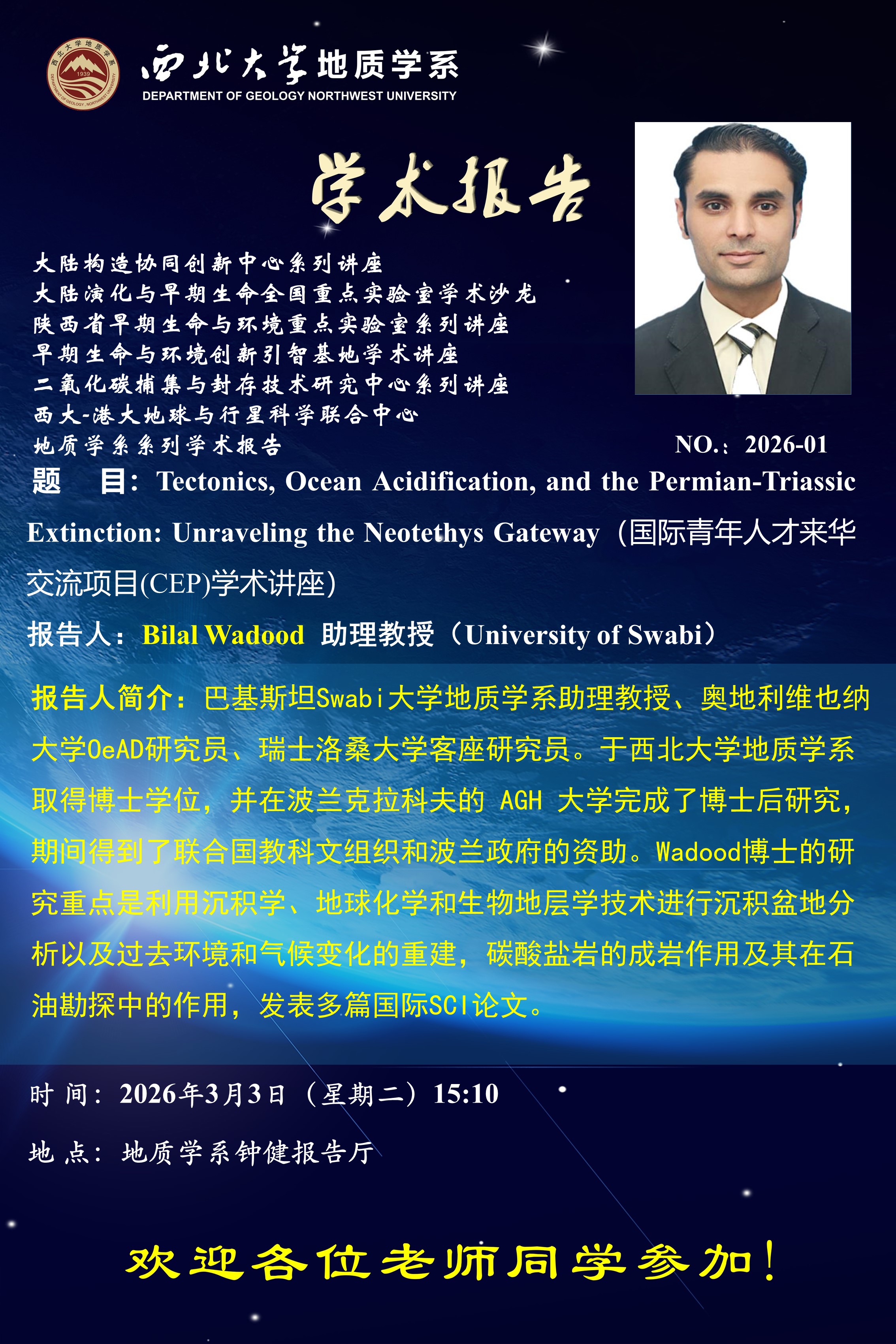
Number:
Reporter:李文帅
Time:2023年4月2日(星期二)15:00
Place:钟健报告厅(系楼218)
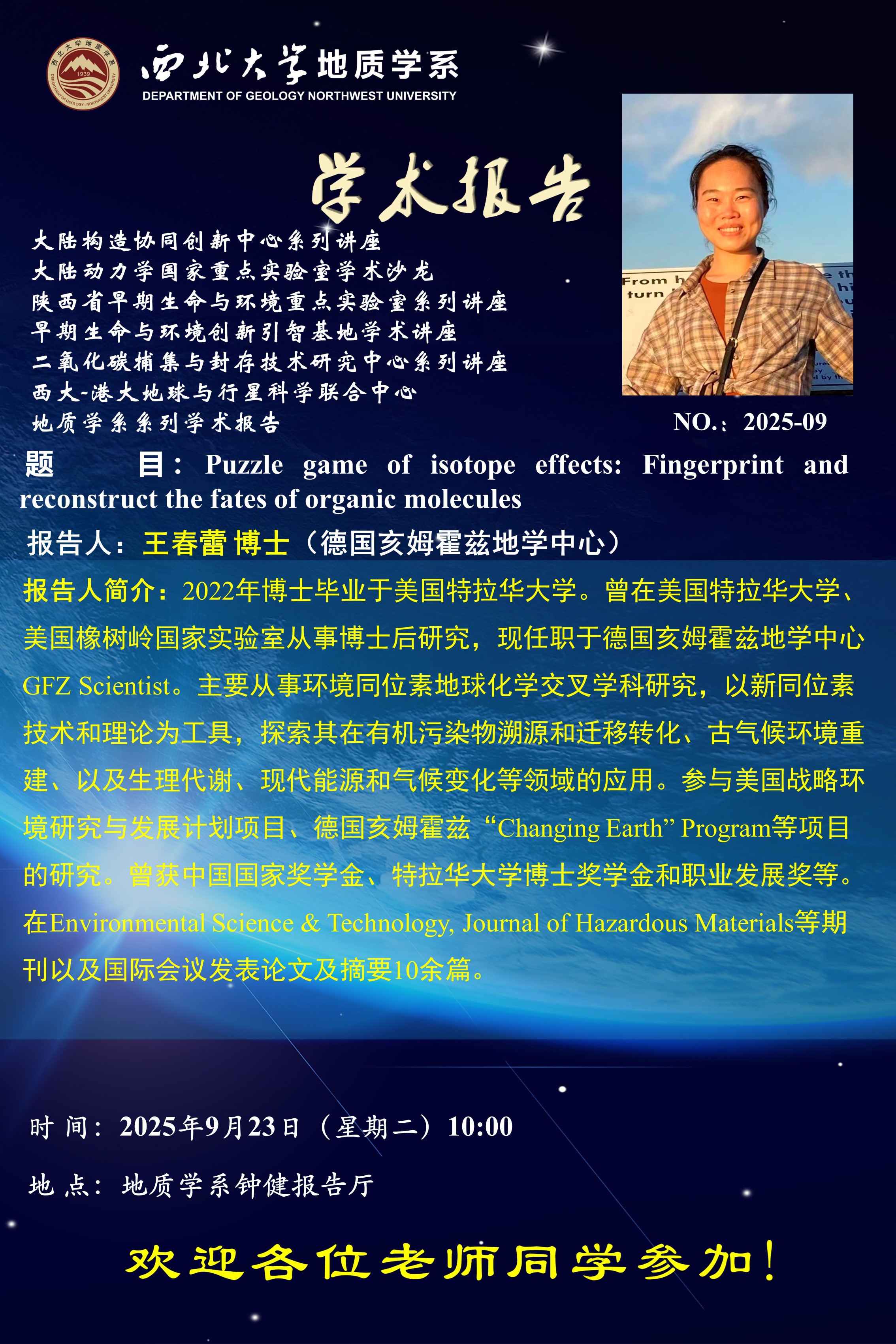
Number:
Reporter:常燎 研究员(北京大学地球与空间科学学院)
Time:2024年3月26日(星期二)10:00
Place:钟健报告厅(系楼218)